
The Cross Section Newsletter:(A news publication of the High Plains Underground Water Conservation District No. 1) January 2026
In this edition of news from HPWD:
- Is a Deeper Water Well a "Better" Water Well? (Not always)
- Texas Landowner Makes a Difference by Restoring Playas
- Annual Water Level Measurements in Progress
- Research and Demonstration Grant Applications
- Conservation Reminder
- Waste Reminder
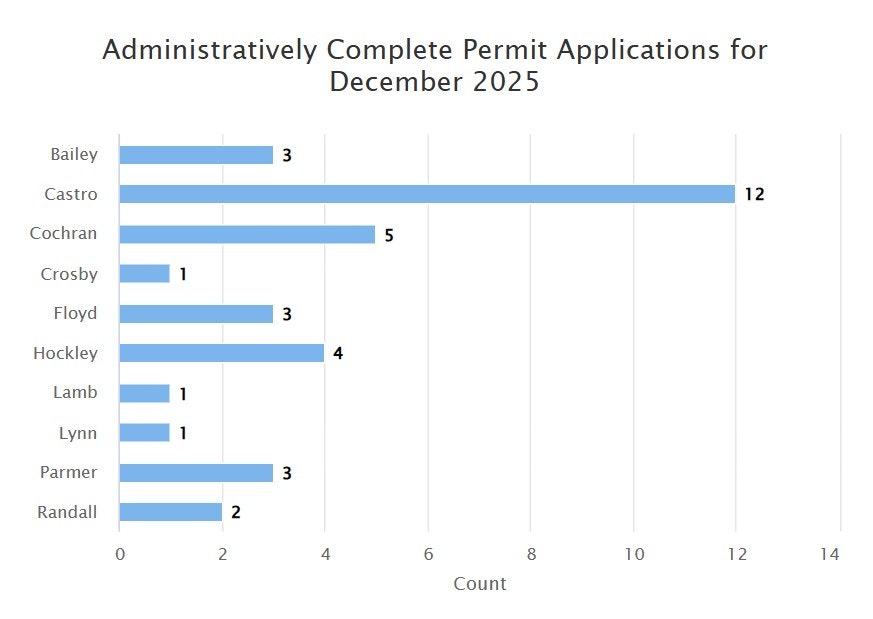
- Administratively Complete Permit Applications
- Upcoming Events
- Texas Water News and Drought Update
Is a Deeper Water Well a "Better" Water Well? (Not always)

A deeper water well is NOT always better than others. Why? The answer is rather simple, as the formation sediments and water quality in deeper units affect the overall productivity. If your water well driller asserts that a deeper well is better, you should ask them why and also question them about the water quality in formations deeper than other wells. Over the past two years, HPWD has encountered numerous instances where a driller constructed a hole significantly deeper than typical Ogallala depths, only to encounter shale, clay, and slight amounts of sand. Of much greater concern, though, is that several of these have encountered salty water, assuredly from the underlying Dockum Aquifer. As a result, the well was more expensive with little to no added productivity, and it experienced comingling issues due to the presence of salty water. State laws prohibit the comingling of different quality waters in the borehole or annular space of water wells. In many parts of HPWD, there is a very noticeable degradation of water quality in the Dockum Aquifer. To avoid these issues, remember:
- HPWD issues permits for water wells completed in the Dockum Aquifer, so it is permissible. However, the spacing rules for Dockum Aquifer water wells can differ from those of the Ogallala/Edwards-Trinity (High Plains) Aquifers. Additionally, completion standards for Dockum Aquifer wells are almost always different from those of our other aquifers.
- It is a licensed driller's responsibility to know and adhere to Texas laws and rules for water well construction.
- In most of our district, it is not permissible to complete a well in the Ogallala and Dockum Aquifers due to the difference in water quality.
- If you want to "drill deeper" than the surrounding wells, anticipating more water, be advised that you may be violating State laws regarding the comingling of different-quality waters. As a result, you could end up with a well that must be plugged or repaired, both of which are costly options.
- The overlying red beds frequently confine the Upper Dockum Aquifer, and if your driller punctures the red beds too much, the salty water may rise into the Ogallala portion of the aquifer.
IF you have any questions about this matter, PLEASE call our office. HPWD has decades of experience and data (over 75,000 driller logs) and wants to help owners with their groundwater questions.
Texas Landowner Makes a Difference by Restoring Playas
Article Submitted by: Joe Richards, Playa & Water Conservation Outreach Specialist, Texas Panhandle, Tomorrow’s Water
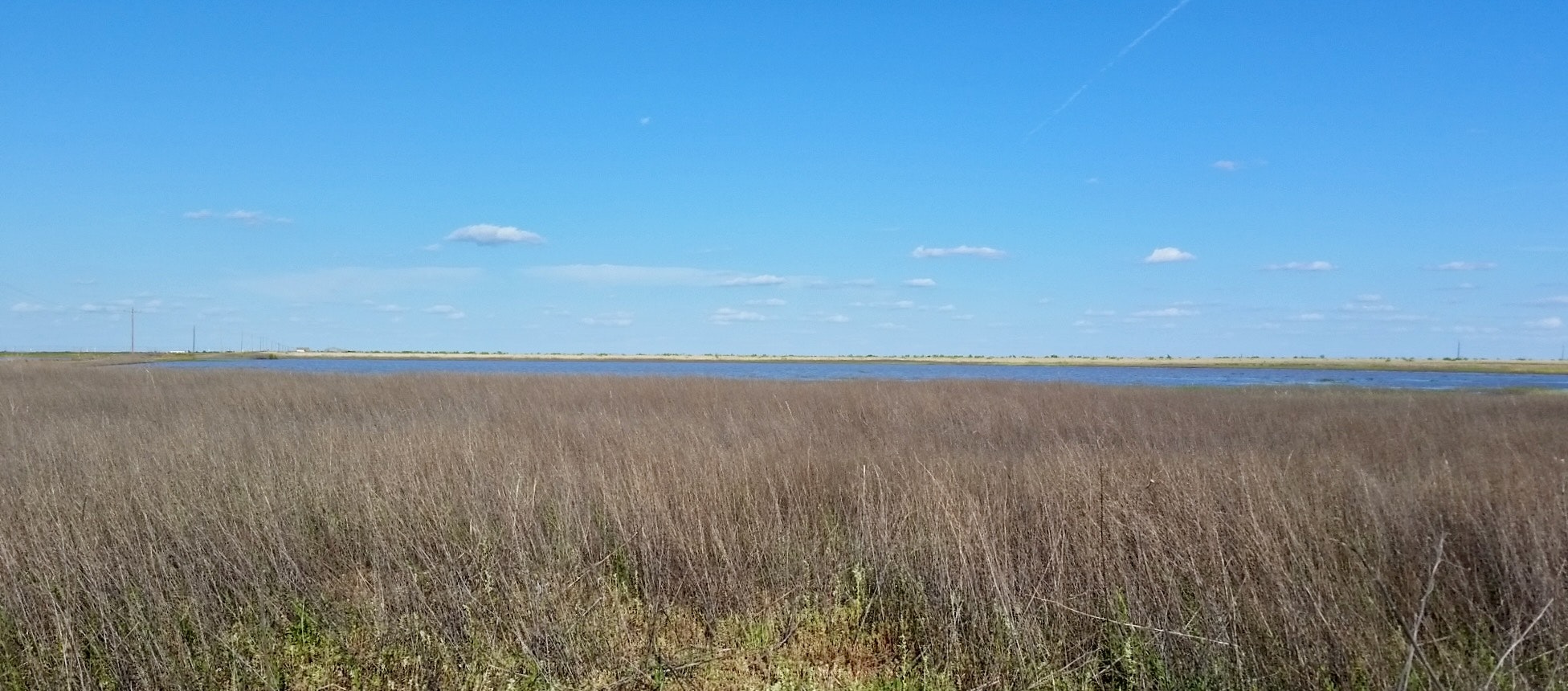
Do Your Part: Texas Landowner Makes a Difference by Restoring Playas
When Norman Burge decided to restore playas on his land, it wasn’t part of a sweeping overhaul or dramatic change to his operation. It was a practical step he believed could make a difference for wildlife, water, and the future of the High Plains.
Found at the lowest point of a watershed, playas are round, shallow basins lined with clay soil that collect and hold rainfall and runoff, forming temporary wetlands. These natural recharge basins play a vital role in replenishing groundwater and supporting wildlife.
Managing land in Floyd County, Texas, and Curry County, New Mexico, Burge has seen firsthand how water availability across the region has changed over time. With much of his acreage enrolled in the Conservation Reserve Program (CRP), restoring a playa fit seamlessly into how he already managed his land.
Because his acres have been in CRP for decades, the restoration didn't change his daily operation. Instead, filling a long-standing pit helped him better understand how playas actually function, not as leaky bowls, but as natural recharge points that help replenish the Ogallala Aquifer.
Over the years, Burge has watched Texas’ irrigation history shift dramatically, from roaring pumps in the 1960s to quiet, dry fields today. Windmills on his own land no longer produce water.
Restoring a playa won’t fix everything, he says, but it’s something he can do. “For me, it’s just doing my part.”
Through small but meaningful restoration efforts, Norman Burge is helping support water, wildlife, and the long-term future of the High Plains. Listen to more of Norman’s story here.
Learn How Playas Can Help You and Your Community
If you are a landowner or a community leader, the Tomorrow’s Water team can help determine whether playas can provide a measurable contribution to you or your community’s water.
Tomorrow’s Water is a collaborative process in which communities, agricultural producers, and conservation organizations work together to design an actionable plan that includes playa restoration to increase groundwater recharge and water use reduction to address their long-term water needs.
Each community is unique and, as such, each plan is unique, too. In many cases, this work includes pairing playa restoration with efforts to reduce aquifer overuse through irrigation efficiency and other methods. Once water use has been reduced, functionally restored playas can provide a sustainable source of future water.
The Tomorrow’s Water team can help determine if playa restoration can support you or your community’s water goals and help you get started developing a plan.
Learn more about playas and the benefits they provide at PlayasWorkForTexans.com. To discuss how playas can help you or your community, contact Joe Richards, Playa & Water Conservation Outreach Specialist for the Texas Panhandle at 806-370-0657 or joe.richards@pljv.org.
Annual Water Level Measurements in Progress

High Plains Water District (HPWD) field technicians are measuring annual water levels in observation wells to determine changes since last year.
The monitoring program encompasses approximately 1,400 privately owned wells, spaced roughly one per nine square miles, throughout the 16 counties served by HPWD.
As each county’s measurements are completed, preliminary results will be posted on our website, allowing landowners, stakeholders, and the public to stay informed with timely updates.
Research and Demonstration Grant Applications

The High Plains Underground Water Conservation District (HPWD) is accepting proposals for 2026 water conservation research, demonstration, and education projects. We are looking for innovative ideas to conserve water and protect our aquifers.
- Proposals are due no later than Monday, February 2, 2026, by 5:00 p.m.
- Apply online here.
Conservation Reminder

Choose Showers Over Baths
Switch to showers instead of baths to cut your water use.
Extra ways to boost water savings:
- Shorten your showers: Even shaving 2 minutes off your shower time makes a difference.
- Install a Water Sense showerhead: Certified models ensure efficiency without sacrificing comfort. These low-flow showerhead models use about 2 gallons per minute or less.
- Use a timer: It keeps you aware of how long you're in there.
- Compare the differences: A standard bathtub requires 30–50 gallons to fill, while a 5-minute shower uses 10 gallons, and a 10-minute shower uses 20 gallons with a low-flow showerhead.
Waste Reminder

Water waste is prohibited under Chapter 36 of the Texas Water Code and High Plains Water District (HPWD) rules. But what exactly counts as “waste”? That’s a question we’ll explore in more depth over the coming months as we highlight key provisions of state law and district regulations.
One important part of the statute—Texas Water Code § 36.001(8)(A)—defines waste as:
Withdrawal of groundwater from a groundwater reservoir at a rate and in an amount that causes or threatens to cause intrusion into the reservoir of water unsuitable for agricultural, gardening, domestic, or stock‑raising purposes.
If you need assistance or have questions about preventing water waste, contact the High Plains Water District office at (806) 762-0181.
Administratively Complete Permit Applications
Upcoming Events
View the HPWD Calendar of events.
Texas Water News and Drought Updates
- Proposition 4's Timeline and Potential Steps Ahead Outline by Texas Water Foundation.
- As the population and economy grow, so does Texas's water demand.
- Texas Ag Law in Review.
- Texas Has 405 Data Centers Powering AI – Another 442 Are Planned.
- The drought conditions map and monthly outlook have been updated.